The practical playbook for agencies moving from static billboards to programmatic, measurable DOOH. Read it all here, or get the eBook by email.
Print-based out-of-home built the industry — but static posters can’t change creative mid-flight, can’t be measured properly, and can’t be bought in minutes. Digital can.
Growing at a CAGR of 11.6%
Data source: Contrive Datum Insights.
The shift isn’t just screens replacing paper. It’s a change in how the medium is bought (programmatically, in real time), how it behaves (dynamic creative that adapts to moment and context) and how it’s judged (delivery, audience and response data instead of estimates). Agencies that make the leap keep their OOH craft — placement instinct, creative judgment, market knowledge — and add the speed and proof clients now expect from every channel.
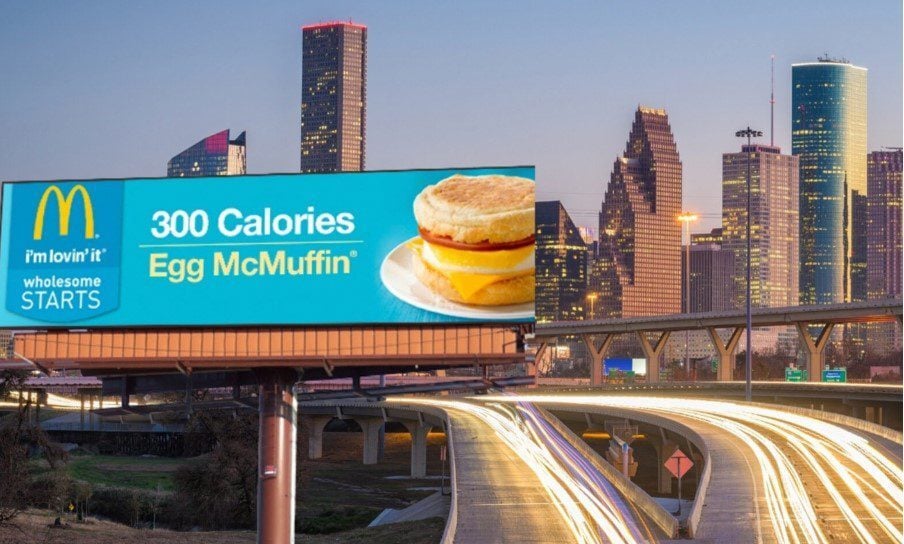
The same roadside real estate — now dynamic, bookable in minutes, and measurable.
Before buying a single digital loop, audit what you already run. The best conversions start with campaigns that are already working on paper.
Programmatic DOOH automates the buying you currently do by phone and paperwork — and adds targeting no poster can match.
You set audience, locations, schedule and budget; the DSP bids for screen time through SSPs and delivers automatically. No middlemen, no manual negotiation.
Real-time bidding means you pay for the moments that matter: the platform buys screen time when your audience conditions are met and stands down when they aren’t. Waste — the empty loops, the wrong dayparts, the audience that was never there — simply isn’t bought. Campaigns that took weeks to book go live in minutes, and optimization happens in-flight instead of post-mortem.
The strongest argument for digital is that you can finally show clients what OOH did.
For context on what the channel can carry: DOOH reaches 80% of consumers weekly and 90% monthly, and roughly two-thirds of viewers take a measurable action after seeing a DOOH ad.
Data source: Nielsen / OAAA Digital OOH Advertising Reports.
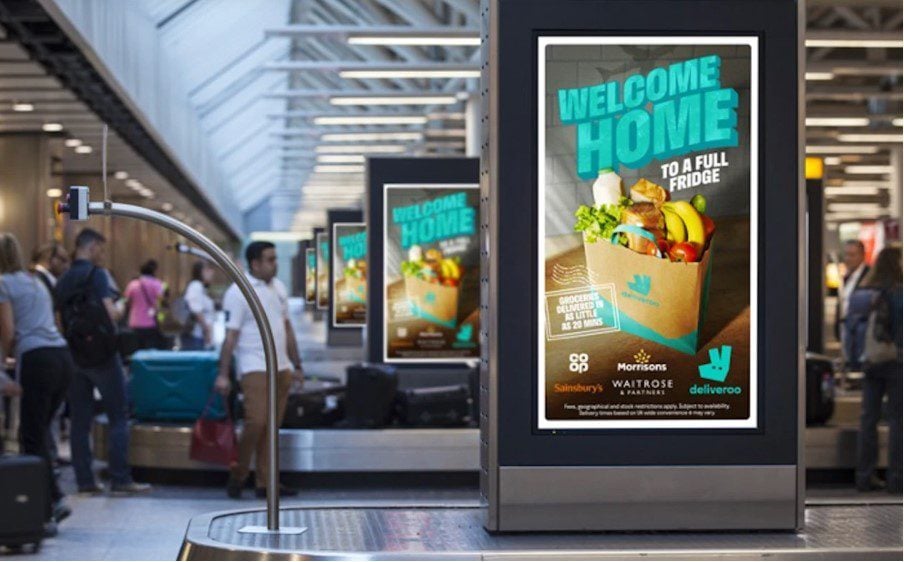
Every play on every screen reports back — the proof layer traditional OOH never had.
Your platform choice decides how fast the transition pays off. Judge candidates on five things:
Real-time availability of premium screens in the markets your clients care about — plus the global network for when they expand.
Audience, POI, daypart and trigger-based targeting (weather, traffic, live events) — not just a map of screens.
Brief to live in minutes, not weeks. If a junior can’t launch a campaign unaided, the platform will bottleneck you.
Delivery, audience and response reporting built in — exportable into your client decks.
DOOH-ready templates and specs so production never blocks the buy.
Not necessarily. Programmatic DOOH is bought on CPM with no long-term commitments, so you control spend per campaign — and you pay for audiences delivered, not weeks of static display.
No. Most agencies transition gradually — keeping committed traditional placements while moving new briefs to programmatic, then rebalancing as contracts renew.
With a self-serve platform, your first campaign can be live in days. Building a full internal workflow — planning, creative, measurement — typically takes one quarter.
Your OOH craft carries over. The new skills — audience-first planning, dynamic creative thinking, data-led reporting — mirror what your digital team already does.
Enter your work email and we’ll send the designed 9-page edition straight to your inbox — keep it, or share it with your team.
One field — that’s it. You’ll receive the eBook by email.
