A practical playbook for planning, buying, creating and measuring programmatic digital out-of-home — at scale. Read it all here, or get the eBook by email.
Your clients’ audiences are harder to reach online every year — and digital out-of-home reaches them where ads can’t be skipped, blocked or scrolled past.
Online channels are saturated: 42% of consumers now use ad blockers across mobile and desktop, and banner blindness means most display ads are simply never seen. Out in the real world, the picture is reversed — people are alert, active and observant of their surroundings.
of consumers aged 16+ reached by DOOH every week
reached every month
of viewers take at least one measurable action after seeing a DOOH ad
Data sources: Backlinko ad-blocker research; Nielsen / OAAA Digital OOH Advertising Reports.
For agencies, that combination — unblockable reach plus measurable response — is exactly what makes DOOH a credible, defensible line on a client media plan. This guide walks you through the fundamentals, the buying mechanics, the creative rules and the measurement playbook, from strategy to real-time optimization.
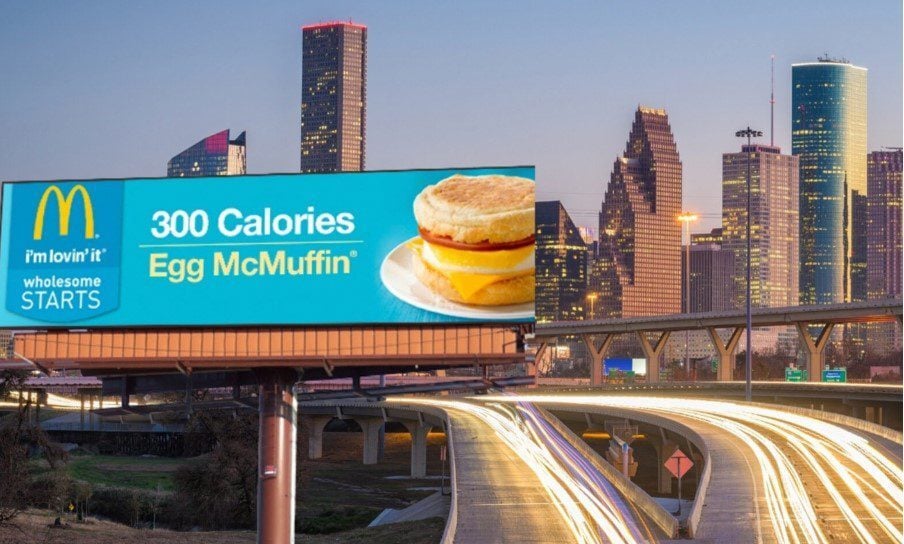
Unblockable, unmissable: roadside digital reaches audiences at scale.
Programmatic DOOH (pDOOH) is the automated buying, selling and delivery of advertising on digital out-of-home screens — the reach of OOH, bought with the precision and speed of digital.
You set the conditions — audience, locations, schedule, budget. The DSP bids competitively for screen time through SSPs and delivers the ad automatically whenever your conditions are met. No middlemen, no manual negotiation.
Where online advertising reads cookies, pDOOH reads movement: anonymized mobile location data reveals how audiences move through their day — commuting routes, store visits, gyms, restaurants, entertainment venues. Platforms use these patterns to identify the screens where a target audience has the highest propensity to be, at the times they’re most likely to be there.
The practical consequence for agencies: a channel that once took weeks of phone calls and paperwork can now be planned, booked and live in minutes — with campaign data flowing back from day one.
DOOH earns its place on the plan in four ways: footfall, retail media, brand and ROI.
Real-world exposure drives real-world visits. In Yahoo! Advertising’s consumer study, 63% of shoppers recalled noticing digital ad displays, 56% purchased an item featured in a DOOH display — and 65% of those purchases were unplanned, triggered by the ad itself.
Screens in and around stores — malls, grocery, pharmacies, gas stations — reach shoppers at the moment of decision, where in-person shopping still accounts for roughly 80% of total sales worldwide.
Large-format, high-impact placements build the awareness and trust lines of the plan: 59% of shoppers say DOOH improved their shopping experience, and 84% of those who noticed a brand through DOOH would consider it again and talk about it with others.
Because pDOOH is bid-based and data-driven, budgets go precisely where the audience is — and performance is measurable, so spend can be defended line by line in the client review.
Data source: Yahoo! Advertising consumer study.
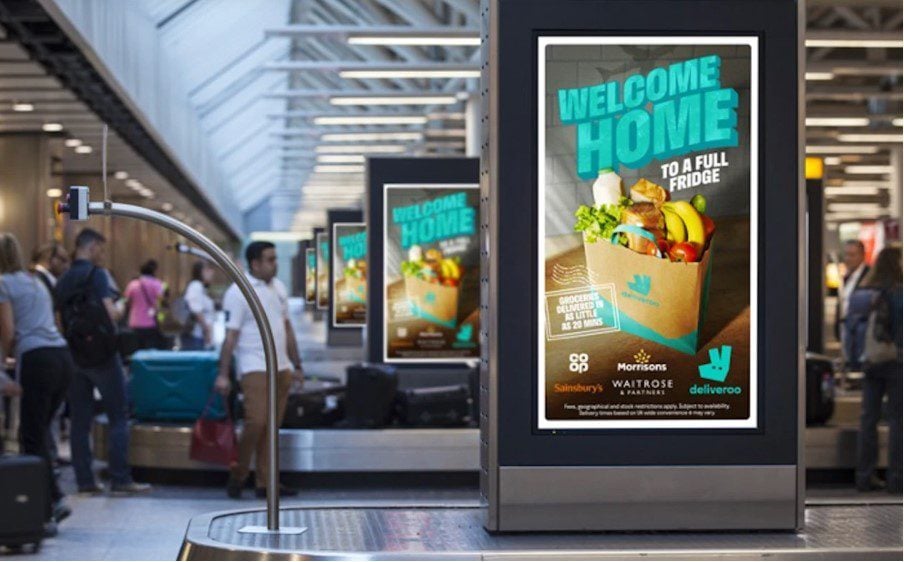
Place-based screens reach travelers and shoppers at the moment that matters.
Traditional OOH was bought screen by screen. Modern DOOH is bought the way you buy digital: audience first.
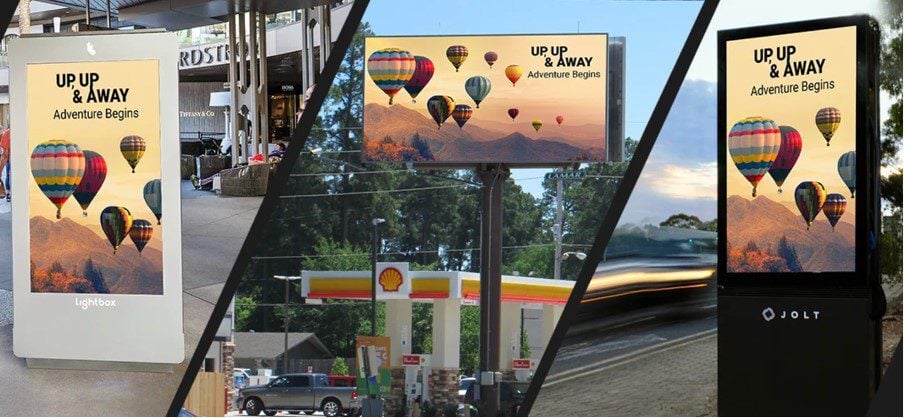
One campaign, adapted across roadside and place-based screens by context.
Creative is the single biggest driver of campaign results — bigger than targeting, context and reach combined.
Data source: Nielsen creative effectiveness research.
Build client creative in a tool made for DOOH — correct formats, resolutions and specs by default — so every ad ships screen-ready. (Our full spec reference: the DOOH Creative Guidelines eBook.)
Measurement is where modern DOOH separates itself from traditional OOH — and where agencies win renewals.
In JCDecaux’s study Programmatic Digital Out of Home: The Time Is Now, pDOOH ranked as the best channel for delivering on both brand and performance KPIs — and the capability agencies valued most was precisely its measurability and data-driven execution.
Everything in this playbook runs from one platform — plan, buy, create and measure, in minutes rather than weeks.
Manage every D/OOH campaign on one platform, with POI mapping and audience planning built in.
Real-time availability of premium inventory from top D/OOH media owners around the world.
Audience, moment, POI and trigger-based targeting — data-driven decisions within set budgets.
Upload creatives — or build them free in our DOOH Design Studio — and launch in a few clicks, with live bidding and automated delivery.
In-flight adjustment of creative, screens and budget in real time, with live performance data.
With live data feeds — weather, traffic and flight data — plus free vertical-specific creative templates, your agency can offer a full programmatic DOOH service to clients immediately.
Programmatic DOOH is bought on CPM like other digital channels, with no long-term commitments. You set the budget per campaign — from a few hundred dollars for a local flight to large multi-market buys — and pay only when your conditions are met.
Yes. Self-serve platforms like The Neuron remove minimum spends and manual IOs, so a two-person team can plan, book and launch a DOOH campaign in minutes using the same inventory the big agencies access.
Through anonymized mobile location data: exposure is matched to outcomes such as store visits (footfall lift), brand-lift studies, and digital retargeting of exposed audiences. The guide's measurement chapter shows how to build a reporting rhythm clients trust.
Static and motion formats across portrait, landscape and large-format resolutions. The core rules: one message, high contrast, legible at distance, and dynamic variations triggered by time, weather or location.
With programmatic buying there are no paper IOs or weeks of negotiation — a campaign can be planned, booked and live in minutes, with delivery data flowing back from day one.
Enter your work email and we’ll send the designed 10-page edition straight to your inbox — keep it, or share it with your team.
One field — that’s it. You’ll receive the guide by email.
