How to measure and attribute DOOH — the metrics, models and proof points that show real campaign ROI. Read it all here, or get the eBook by email.
Stop guessing. Start proving. DOOH is no longer a “brand” line you justify on faith — it’s a measurable, ROI-focused channel when you set it up as one.
In JCDecaux’s study Programmatic Digital Out of Home: The Time Is Now, pDOOH ranked as the best channel for delivering on both brand and performance KPIs — and the capability marketers valued most was precisely its measurability and data-driven execution. The engagement base is there to measure: DOOH reaches 80% of consumers weekly, and roughly two-thirds of viewers take at least one measurable action after seeing a DOOH ad.
Data sources: JCDecaux; Nielsen / OAAA.
DOOH has no click — and still attributes, because exposure happens at a known place and time.
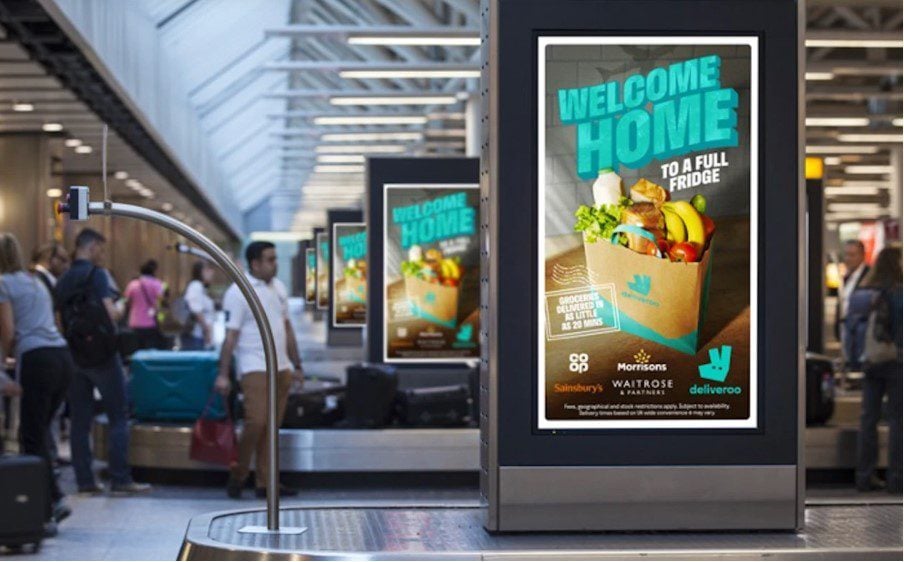
Known screen, known moment, known audience — the ingredients attribution needs, no click required.
Four barriers make DOOH measurement hard — each has a simple fix applied before launch, not after.
Fix: one KPI per campaign, agreed with the client in writing, with its capture method named on the brief.
Fix: capture pre-flight footfall, branded search and site traffic for 2–4 weeks before launch. Lift needs a “before.”
Fix: build the QR / short URL / promo code into the master creative from day one — not retrofitted after someone asks.
Fix: platform reporting, client analytics and POS data mapped to one flight calendar, owned by one person.
Run this checklist on every brief and the proof exists by default — before, during and after the campaign.
Data persuades only when it’s framed against the promise you made.
Delivery vs. plan, early response signals, and what you changed. Shows stewardship, builds trust.
Lead with the KPI from the brief — “footfall up X% in exposed areas” — then support with audience and delivery numbers. One page, visual, client-logo-ready.
Translate the result into the client’s own math: cost per visit, cost per redemption, cost per thousand verified audience — beside their social and search equivalents.
Through anonymized mobile location data: exposure is matched to real-world outcomes like store visits, plus brand-lift studies and digital retargeting of exposed audiences.
Comparing visit rates of people exposed to your campaign against a control group — the uplift is the campaign's measurable effect on real-world behavior.
Impressions and eCPM for delivery, footfall or store-visit uplift for action, and brand-lift for awareness — framed as business outcomes, not media jargon.
Yes. Devices observed near your screens during the campaign can be retargeted with mobile and social ads, extending the exposure into a measurable digital journey.
Enter your work email and we’ll send the designed 8-page edition straight to your inbox — keep it, or share it with your team.
One field — that’s it. You’ll receive the eBook by email.
