A clear, jargon-light guide to programmatic DOOH for agencies — how the buying works, and how to sell it in with confidence. Read it all here, or get the eBook by email.
Small agencies are outpacing big networks in DOOH — not because they know more about ad tech, but because modern platforms made the knowledge unnecessary.
Plug-and-play pDOOH platforms make setup comparable to running Meta Ads: pick screens on a map, set budget and schedule, upload creative, go live. The expertise that matters is the one you already have — knowing your client, their customers and their market. The platform supplies the rest.
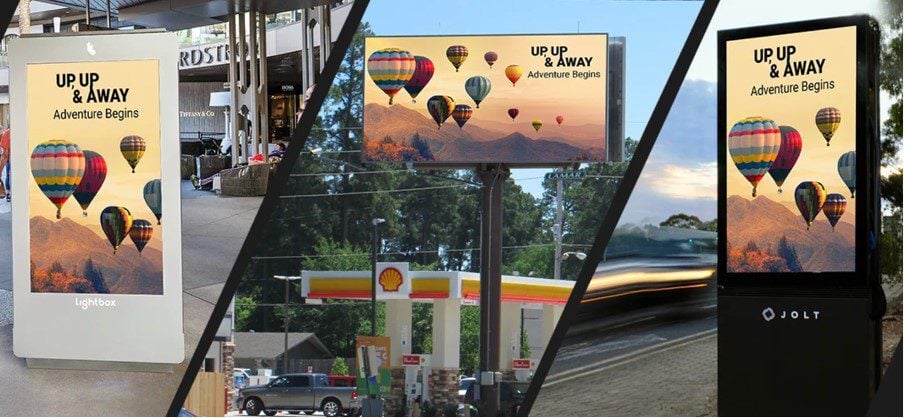
Premium-looking, fast-launching: the channel sells itself when the campaign is visible in the real world.
You set audience, locations, schedule and budget; the DSP bids for screen time through SSPs and delivers automatically. No middlemen, no manual negotiation.
Pricing behaves like any auction market: premium screens and peak moments cost more; flexibility earns discounts. Floor prices protect media owners, so quality inventory stays quality.
Your first campaigns should prove value fast. This framework is built for quick, defensible wins:
Local, promotional, time-sensitive — a restaurant, clinic, dealership or event with a clear call to action and locations near screens.
Footfall this month. Bookings for the event. Calls on the promotion. One goal, one number, agreed in writing.
Screens around the client’s location and their customers’ routes — POI targeting beats citywide scatter at this scale.
Seven words, one image, bold contrast, clear offer. Use DOOH-ready templates; don’t hand-design the first campaign.
QR scans, promo codes, footfall uplift, branded search. Report against the one goal from step 2 — nothing else.
Lead with the moment, not the mechanism: “Your customers pass this screen 40 times a month — here’s what it costs to own it.” Bring a mockup of the client’s brand on a real local screen; it closes more budgets than any slide of ad-tech diagrams.
Platform access, pricing sheet, one-page service description, and your target list of five best-fit clients.
Pitch with a branded mockup, book a small flight, launch with templated creative. Goal agreed in writing.
In-flight tweaks, screenshots of live screens for the client, and your first performance snapshot.
Turn the result into a case study, standardize the package, and pitch the next three clients with proof in hand.
That’s the whole system: one client, one goal, one proven result — then repetition. The agencies winning in DOOH aren’t the ones who studied longest; they’re the ones who launched first.
Automated buying of digital out-of-home screens: you set audience, locations, schedule and budget, and the platform bids for screen time whenever your conditions are met.
No. Self-serve DSPs like The Neuron are built for agency teams without programmatic specialists — if you can run paid social, you can run pDOOH.
There are no minimum commitments. Agencies typically pilot with a small local flight to learn the workflow, then scale what works.
Minutes, not weeks. No paper IOs, no negotiation — plan, book and launch in one session, with delivery data from day one.
Enter your work email and we’ll send the designed 8-page edition straight to your inbox — keep it, or share it with your team.
One field — that’s it. You’ll receive the eBook by email.
